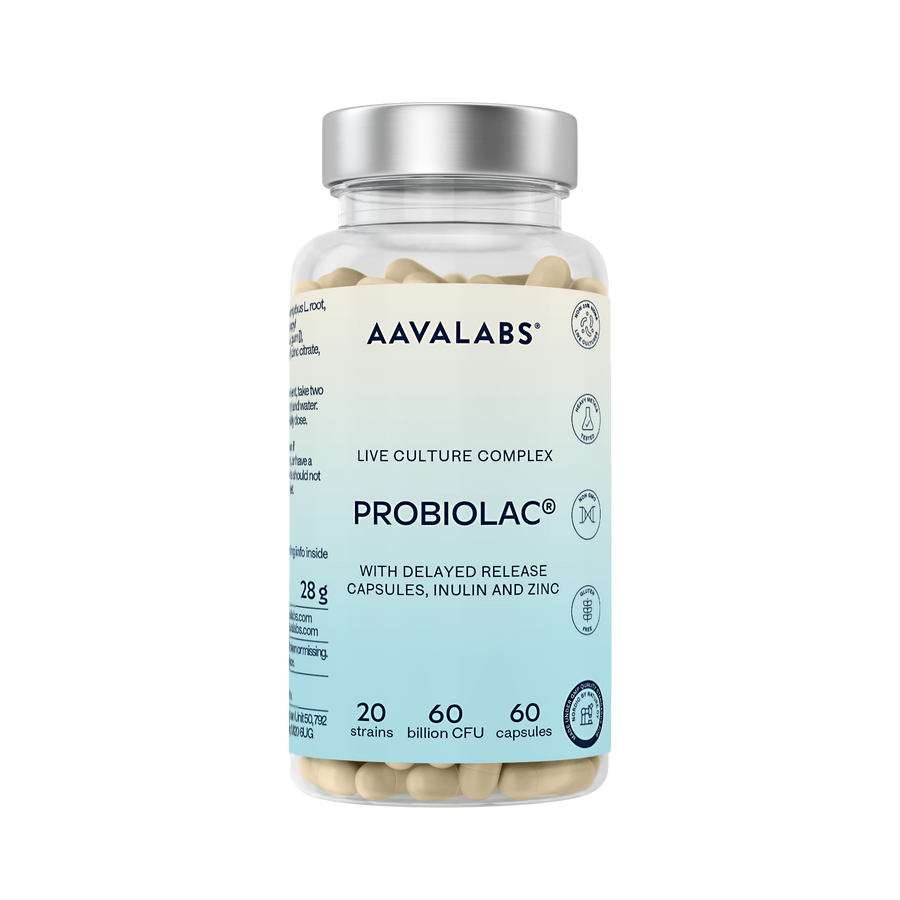
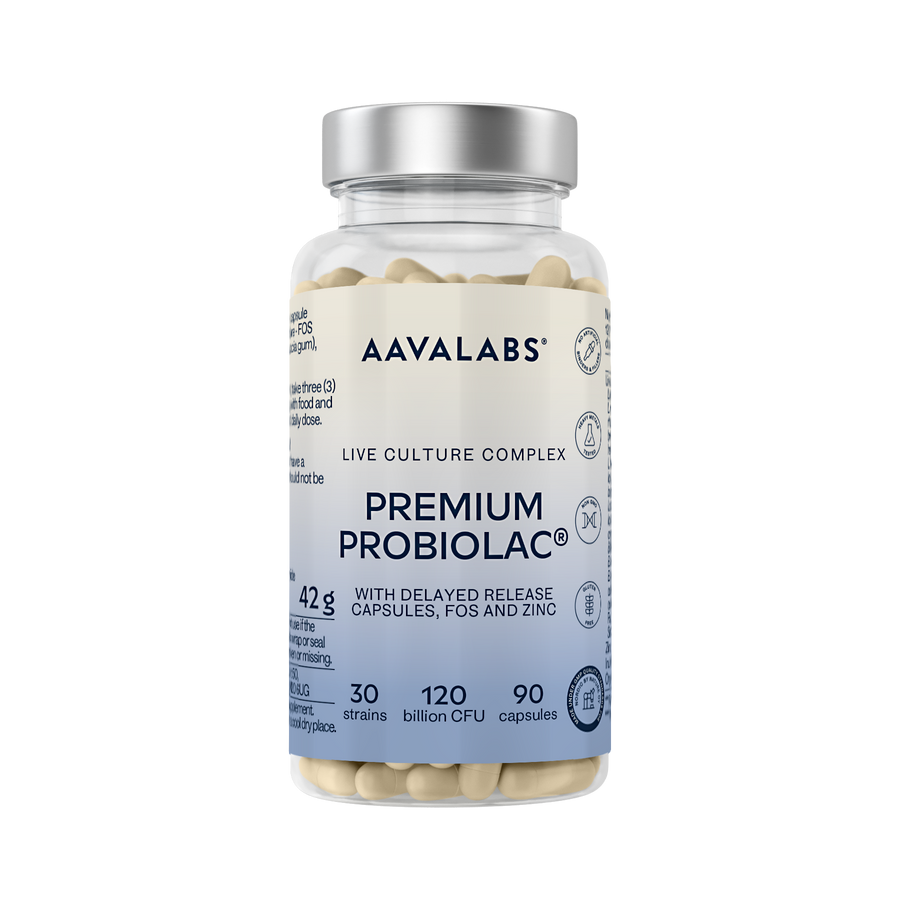
Your gut is home to a complex community of microorganisms known as the gut microbiome. These microorganisms interact with your diet and digestive system, making the gut an important and fascinating area of nutrition research.
But what exactly are probiotics, how do they work, and what is the difference between probiotics and prebiotics? In this guide, we explore the gut microbiome, probiotic strains, CFUs and what to look for when choosing a probiotic supplement.
Your gut is home to a vast community of microorganisms that form what is known as the gut microbiome. These microorganisms interact with our diet, digestive system and many other biological processes, making the gut an fascinating area of nutrition research.
Probiotics are often mentioned in conversations about gut health, but what exactly are they? And how are they different from prebiotics or the bacteria already living in your gut?
In this guide, we explore the basics of the gut microbiome, what probiotics are, how different probiotic strains can differ and what to consider when choosing a probiotic supplement.
Quick answer: Probiotics are live microorganisms that, when administered in adequate amounts, confer a health benefit on the host. Different probiotic strains can have different characteristics and effects, which means probiotics should not be treated as one single ingredient. Prebiotics are different. They are substrates that are selectively used by microorganisms and can provide a health benefit.
What are probiotics?
Probiotics are live microorganisms that, when consumed in adequate amounts, can provide a health benefit.
You will commonly see microorganisms from groups such as Lactobacillus and Bifidobacterium used in probiotic foods and supplements, although many different microorganisms are being studied.
One important detail is that probiotics are not all interchangeable. Their characteristics depend on the specific microorganism and strain.
This means that research involving one probiotic strain cannot automatically be applied to every other probiotic product.
What is the gut microbiome?
Your digestive tract is home to a complex community of microorganisms, including bacteria, viruses, fungi and other microbes. Together with their genetic material and surrounding environment, they form what is commonly referred to as the gut microbiome.
The composition of the gut microbiome differs from person to person and can be influenced by many factors, including diet, age, environment, medication and lifestyle.
These microorganisms interact with the food we eat and participate in numerous processes within the digestive system. Some gut bacteria, for example, can ferment dietary components that our own digestive enzymes cannot fully break down.
This can result in the production of substances such as short chain fatty acids, which continue to be an important area of scientific research.
How do probiotics work?
There is no single mechanism that explains how every probiotic works.
Different microorganisms can interact with the gut environment in different ways. Their effects can depend on the strain, amount consumed, formulation and the individual taking them.
This is why it is useful to think about probiotics as specific microorganisms rather than simply as good bacteria.
Researchers study probiotic strains for a variety of purposes, including their interactions with the gut microbiome, digestive processes and the intestinal environment.
However, findings from one strain or combination of strains should not automatically be generalised to all probiotics.
What is the difference between probiotics and prebiotics?
Probiotics and prebiotics sound similar, but they describe different things.
Probiotics
Probiotics are live microorganisms that provide a health benefit when administered in adequate amounts.
Prebiotics
Prebiotics are substrates that are selectively used by microorganisms and provide a health benefit.
Many prebiotic substances are types of dietary fibre, although not every fibre is considered a prebiotic.
Examples of ingredients commonly discussed in the context of prebiotics include inulin and certain fructooligosaccharides.
Foods such as onions, garlic, chicory, asparagus, bananas, oats and legumes can provide different types of fermentable fibres as part of a varied diet.
What are synbiotics?
You may also come across the term synbiotic when looking at gut health products.
Synbiotics combine live microorganisms with substrates that are selectively used by microorganisms. The idea is to bring these components together within one formulation.
As with probiotics, the specific formulation matters. Simply combining any probiotic with any fibre does not automatically tell you how a product will behave.
What does CFU mean?
CFU stands for colony forming units. It is commonly used to indicate the quantity of viable microorganisms in a probiotic product.
You may see probiotic supplements containing millions or billions of CFU.
A higher CFU number does not automatically mean that a probiotic is better. The specific strains, amount studied, formulation, storage conditions and intended use are also important considerations.
Rather than choosing a supplement simply because it has the largest number on the label, look at the complete formulation.
Does having more probiotic strains make a supplement better?
Not necessarily. Some probiotic products contain a single strain, while others combine many different strains.
A larger number of strains does not automatically make a product more effective. What matters is which strains are included, the quantities provided and whether the formulation is appropriate for its intended purpose.
This is particularly important when comparing probiotic supplements, as two products with the same total CFU count can contain very different combinations of microorganisms.
How should you choose a probiotic supplement?
Probiotic labels can look complicated, but a few details can make them easier to understand.
Look at the strains
Do not look only at the word probiotic. Check which microorganisms and strains the product actually contains.
Check the CFU count
CFU provides information about the quantity of viable microorganisms, but remember that a larger number is not automatically better.
Look at the complete formula
Some products combine probiotics with prebiotic ingredients, vitamins, minerals or other components. Check the entire ingredient list to understand what you are taking.
Check storage instructions
Because probiotics contain live microorganisms, storage conditions can matter. Follow the instructions provided with the individual product.
Consider quality and transparency
Look for clear information about the microorganisms included, quantities, recommended intake, storage and product quality.
A transparent label should make it possible to understand what is actually inside the supplement rather than relying on vague claims about gut health.
Can probiotics cause side effects?
Some people may notice temporary digestive changes when using certain probiotic products, such as changes in gas or bloating.
Individual responses can vary according to the product, microorganisms, amount and personal circumstances.
If you experience persistent or concerning symptoms, stop using the product and seek appropriate professional advice.
People with underlying health conditions or compromised immune systems should speak with a healthcare professional before using probiotic supplements.
How can you support your gut through your diet?
Gut health is about much more than probiotic supplements.
A varied diet can provide different fibres and nutrients while exposing your gut microbiome to a diverse range of dietary substrates.
Foods worth including as part of a balanced diet can include:
- Vegetables and fruit
- Whole grains
- Legumes
- Nuts and seeds
- Fermented foods where appropriate
Rather than focusing on one supposed gut health food, dietary variety provides a more useful foundation.
Frequently asked questions
What are probiotics in simple terms?
Probiotics are live microorganisms that provide a health benefit when administered in adequate amounts. Different probiotic strains can have different characteristics, so they should not all be considered interchangeable.
What is the gut microbiome?
The gut microbiome refers to the complex community of microorganisms and their genetic material within the digestive tract. Its composition varies between individuals and can be influenced by diet, medication, age, environment and lifestyle.
What is the difference between probiotics and prebiotics?
Probiotics are live microorganisms, while prebiotics are substrates selectively used by microorganisms that provide a health benefit. Many prebiotics are forms of dietary fibre, but not every dietary fibre is a prebiotic.
What does CFU mean in probiotics?
CFU means colony forming units and is used to indicate the quantity of viable microorganisms in a probiotic product.
Are more CFUs better?
Not necessarily. A larger CFU count does not automatically mean a better probiotic. The specific strains, formulation, amount and intended use are also important.
Are more probiotic strains better?
Not necessarily. The number of strains alone does not determine the quality or suitability of a probiotic. The identity and amount of the individual strains matter too.
Do probiotics need to be refrigerated?
It depends on the formulation. Some probiotic products require refrigeration, while others are designed to remain stable at room temperature. Always follow the storage instructions provided with the product.
Key takeaways
- Probiotics are live microorganisms that can provide a health benefit when administered in adequate amounts.
- The gut microbiome is a complex community of microorganisms living within the digestive tract.
- Different probiotic strains can have different characteristics and should not be treated as interchangeable.
- Prebiotics and probiotics are different, although they can be used together.
- CFU indicates the quantity of viable microorganisms, but a higher number does not automatically mean a better supplement.
- The number of strains alone does not determine probiotic quality.
- A varied diet remains an important foundation for supporting overall digestive health.
This article is for informational purposes only and is not intended to diagnose, treat, cure or prevent any disease. Food supplements should not be used as a substitute for a varied, balanced diet and healthy lifestyle. If you have a medical condition or are unsure whether a probiotic supplement is suitable for you, speak with an appropriate healthcare professional.