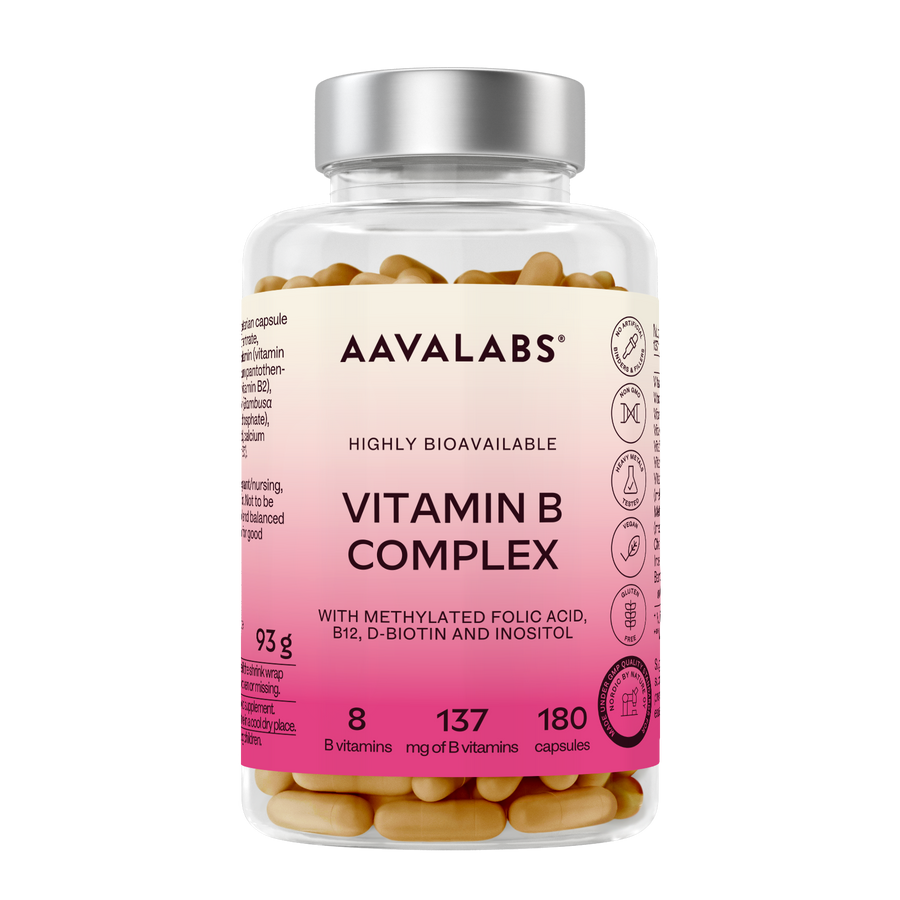
B vitamins play important roles in normal energy-yielding metabolism and help the body use nutrients from food. Discover what the different B vitamins do, where to find them and when supplementation may be useful.
B vitamins play important roles in the processes that help your body release energy from food. Several B vitamins contribute to normal energy-yielding metabolism, while others support functions including the nervous system, red blood cell formation and the reduction of tiredness and fatigue.
Unlike caffeine, B vitamins are not stimulants. Instead, they participate in normal metabolic processes that your body relies on every day.
What Do B Vitamins Actually Do for Energy?
The B vitamin family includes eight different vitamins. Although each has its own functions, many are involved in processes related to energy metabolism, the nervous system and normal psychological function.
Here is a quick overview of some of their authorised functions:
- B1 (Thiamine): contributes to normal energy-yielding metabolism, normal functioning of the nervous system and normal psychological function.
- B2 (Riboflavin): contributes to normal energy-yielding metabolism, the reduction of tiredness and fatigue, and the protection of cells from oxidative stress.
- B3 (Niacin): contributes to normal energy-yielding metabolism, normal functioning of the nervous system and the reduction of tiredness and fatigue.
- B5 (Pantothenic Acid): contributes to normal energy-yielding metabolism, normal mental performance and the reduction of tiredness and fatigue.
- B6 (Vitamin B6): contributes to normal energy-yielding metabolism, normal functioning of the nervous system, normal psychological function and the reduction of tiredness and fatigue.
- B7 (Biotin): contributes to normal energy-yielding metabolism, normal functioning of the nervous system and the maintenance of normal hair and skin.
- B9 (Folate): contributes to normal psychological function, normal blood formation and the reduction of tiredness and fatigue.
- B12 (Cobalamin): contributes to normal energy-yielding metabolism, normal functioning of the nervous system, normal red blood cell formation and the reduction of tiredness and fatigue.
B vitamins do not provide calories or energy themselves. Instead, several of them contribute to the normal metabolic processes that allow the body to use energy from food.
Can Low B Vitamin Intake Contribute to Tiredness?
Several B vitamins, including B2, B3, B5, B6, B9 and B12, contribute to the reduction of tiredness and fatigue.
Individual requirements and the risk of inadequate intake can depend on factors such as diet, age and life stage. Vitamin B12 deserves particular attention for people following vegan diets because reliable dietary sources are predominantly found in animal-derived foods and fortified products.
If you experience persistent or unexplained tiredness, it is important not to assume that a vitamin deficiency is the cause. Fatigue can have many different causes, and appropriate testing and professional advice can help identify what is actually going on.
Why Is Vitamin B12 Particularly Important?
Vitamin B12 contributes to several important functions in the body. It contributes to normal energy-yielding metabolism, normal functioning of the nervous system, normal psychological function, normal red blood cell formation and the reduction of tiredness and fatigue.
Natural dietary sources of vitamin B12 include meat, fish, eggs and dairy products. People following vegan diets therefore need to obtain sufficient vitamin B12 from fortified foods or supplementation.
How Is Vitamin B12 Absorbed?
Vitamin B12 absorption is a multi-step process. In the digestive system, vitamin B12 eventually binds to a protein called intrinsic factor, which is produced by cells in the stomach. This complex allows vitamin B12 to be absorbed in the small intestine.
Certain medical conditions, gastrointestinal changes and some medications can affect vitamin B12 absorption. If you are concerned about your B12 status, a healthcare professional can help determine whether testing or supplementation is appropriate.
Why Does Our Vitamin B Complex Contain Vitamin B12?
Our Vitamin B Complex combines the eight B vitamins in one formula, including vitamin B12.
Vitamin B12 contributes to normal energy-yielding metabolism, normal functioning of the nervous system, normal psychological function, normal red blood cell formation and the reduction of tiredness and fatigue.
What Are the Best Food Sources of B Vitamins?
B vitamins are found across a wide variety of foods, which is why a varied diet is an important foundation for adequate intake.
- Leafy greens and legumes: useful dietary sources of folate.
- Whole grains, seeds and nuts: provide several B vitamins.
- Eggs and dairy products: provide nutrients including riboflavin and vitamin B12.
- Fish and meat: provide several B vitamins, including B6 and B12.
- Fortified foods: can be particularly important sources of vitamin B12 for people following plant-based diets.
Where dietary intake is insufficient, a Vitamin B Complex can provide several B vitamins together in one daily formula.
When Is the Best Time to Take B Vitamins?
There is no universal time of day at which B vitamins must be taken. The most important consideration is following the recommended intake instructions for your particular supplement.
For many people, taking a B Complex alongside an established daily routine makes consistent supplementation easier.
Supporting Energy Metabolism Every Day
Energy starts with more than the food on your plate. Your body also needs the micronutrients involved in processing and using those nutrients.
Several B vitamins contribute to normal energy-yielding metabolism, while B2, B3, B5, B6, B9 and B12 contribute to the reduction of tiredness and fatigue.
A varied diet should always provide the foundation. Where additional nutritional support is appropriate, a comprehensive Vitamin B Complex can provide all eight B vitamins in one formula.
Frequently Asked Questions
Do B Vitamins Give You Energy Directly?
No. B vitamins do not contain energy themselves. Instead, several B vitamins contribute to normal energy-yielding metabolism, helping support the processes through which the body uses energy from food.
Which B Vitamins Contribute to Energy Metabolism?
Thiamine, riboflavin, niacin, pantothenic acid, vitamin B6, biotin and vitamin B12 all contribute to normal energy-yielding metabolism. Several B vitamins also contribute to the reduction of tiredness and fatigue.
Which B Vitamins Help Reduce Tiredness and Fatigue?
Riboflavin, niacin, pantothenic acid, vitamin B6, folate and vitamin B12 contribute to the reduction of tiredness and fatigue.
Are B Vitamins Important for Vegans and Vegetarians?
Vitamin B12 is particularly important for people following vegan diets because reliable natural dietary sources are predominantly animal-derived. Fortified foods and supplements can therefore play an important role in achieving an adequate vitamin B12 intake.
Are All B Vitamins Water-Soluble?
Yes. The B vitamins are water-soluble. However, this does not mean that unlimited amounts should be consumed or that high intakes are automatically harmless. Supplements should always be taken according to their recommended daily intake.
Should You Take Individual B Vitamins or a B Complex?
This depends on individual nutritional needs. A B Complex provides multiple B vitamins together in one formula, while an individual vitamin may be more appropriate when a specific nutritional need has been identified. If you have a diagnosed deficiency or concerns about your nutrient status, seek advice from a qualified healthcare professional.