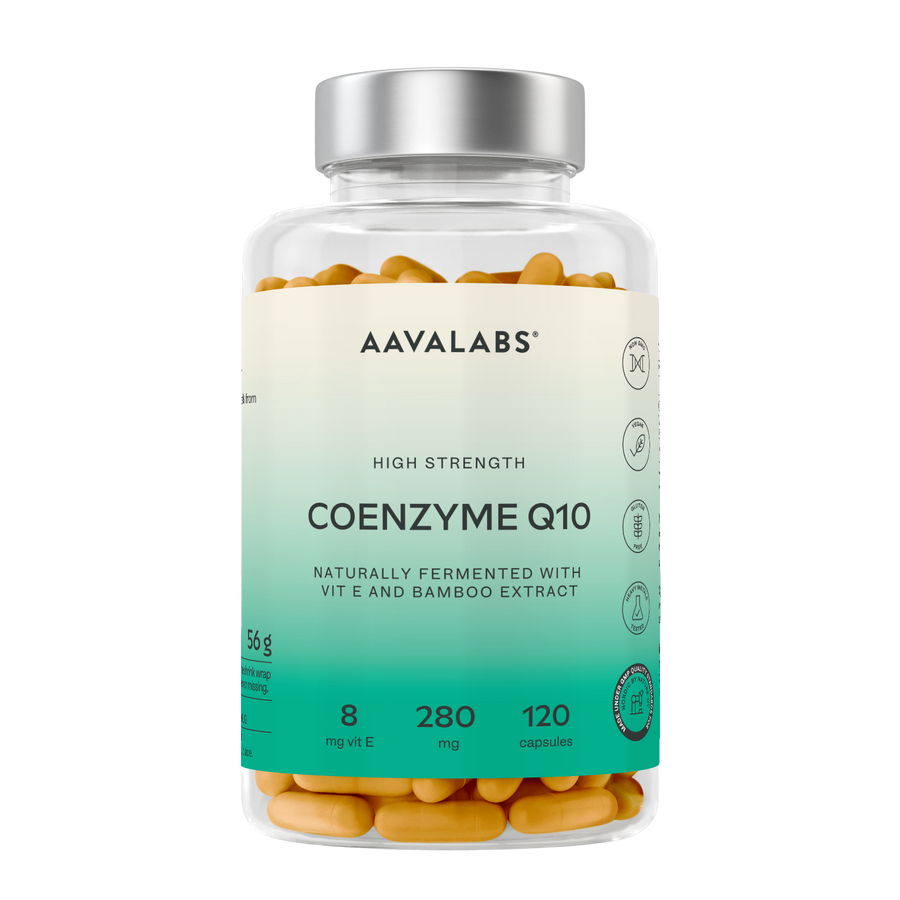
CoQ10 plays an important role in cellular energy production and antioxidant activity. Discover what it does, where it comes from and what research says about supplementation.
Coenzyme Q10, commonly known as CoQ10, is a naturally occurring compound found throughout the body. It plays an important role in cellular energy production and also acts as an antioxidant.
Your body produces CoQ10 naturally, but levels can change with age and other factors. Understanding what CoQ10 does, where it comes from and why it is used in supplements can help you decide whether it has a place in your daily routine.
What Is Coenzyme Q10?
Coenzyme Q10 is a fat-soluble compound found naturally in almost every cell in the human body. It is particularly concentrated in organs with high energy requirements, including the heart, liver and kidneys.
CoQ10 exists primarily in two forms: ubiquinone and ubiquinol. Both forms are involved in the body's natural CoQ10 cycle and can be converted from one form to the other.
What Does CoQ10 Do in the Body?
One of CoQ10's most important biological roles takes place inside the mitochondria, the structures within cells responsible for producing much of the energy the body uses.
CoQ10 participates in the mitochondrial electron transport chain, a process involved in producing adenosine triphosphate, or ATP. ATP provides usable energy for cellular processes throughout the body.
Why Is CoQ10 Important for Cellular Energy?
Every cell requires energy to function, but some tissues have particularly high energy demands. The heart, for example, works continuously and contains large numbers of mitochondria.
Because CoQ10 participates in mitochondrial energy production, it has attracted considerable scientific interest in relation to energy metabolism and tissues with high energy requirements.