CoQ10 plays an important role in cellular energy production and antioxidant activity. Discover how Coenzyme Q10 works, why levels can change with age and what research says about CoQ10 and cardiovascular health.
Coenzyme Q10, usually known as CoQ10, is a naturally occurring compound found throughout the body. It plays an important role in cellular energy production and also acts as an antioxidant.
Because the heart has particularly high energy requirements, CoQ10 has become an important area of research in cardiovascular health. Researchers have also investigated its relationship with ageing, statin use, oxidative stress and blood pressure.
So what does CoQ10 actually do, why does the body need it and what does current research tell us about supplementation?
What Is CoQ10 and Why Does Your Body Need It?
Coenzyme Q10 is a vitamin-like compound naturally produced by the body. It is found in cells throughout the body, with particularly high concentrations in organs with substantial energy requirements, including the heart, liver and kidneys.
CoQ10 is closely associated with the mitochondria, the structures within cells responsible for producing much of the energy the body uses.
Its primary role is to participate in the mitochondrial processes involved in producing adenosine triphosphate, or ATP. ATP provides usable energy for cellular processes throughout the body.
CoQ10 also has antioxidant properties, helping protect cellular structures from oxidative damage.
Why Is CoQ10 Important for Cellular Energy Production?
Every cell requires energy to perform its normal functions. Much of this energy is produced inside the mitochondria through a series of biochemical reactions known as the electron transport chain.
CoQ10 participates in this process by transferring electrons within the mitochondrial membrane, helping enable the production of ATP.
This function is particularly relevant in tissues with high and continuous energy requirements.
The heart is one of the most metabolically active organs in the body. It contracts continuously throughout life and therefore depends on a consistent supply of cellular energy.
What Is the Connection Between CoQ10 and Heart Health?
The relationship between CoQ10 and cardiovascular health has been studied for several decades.
One reason for this interest is the heart's exceptionally high demand for energy. Another is CoQ10's antioxidant activity and its presence within cellular membranes and mitochondria.
Researchers have investigated CoQ10 supplementation in several cardiovascular contexts, including heart failure, endothelial function and blood pressure.
However, CoQ10 supplements should not be considered a treatment or replacement for prescribed cardiovascular medication. Anyone with a diagnosed heart condition should discuss supplementation with a healthcare professional.
What Does Research Say About CoQ10 and Blood Pressure?
CoQ10 has been investigated for its potential relationship with blood pressure, particularly in people with hypertension.
Some clinical studies and meta-analyses have reported changes in blood pressure following CoQ10 supplementation, while results across the broader evidence base have not always been consistent.
Researchers have proposed several possible mechanisms, including effects related to oxidative stress and endothelial function, but further research is needed to understand the clinical relevance of these findings.
If you have high blood pressure or take blood pressure medication, CoQ10 should not be used as a substitute for medical treatment. Discuss supplementation with your doctor or pharmacist before changing your routine.
How Does CoQ10 Act as an Antioxidant?
Oxidative stress occurs when the production of reactive molecules exceeds the body's ability to neutralise them effectively.
CoQ10 can act as an antioxidant within cellular membranes, where it helps protect lipids and other cellular components from oxidation.
This antioxidant activity is another reason researchers are interested in CoQ10 in relation to tissues with high metabolic activity, including the cardiovascular system.
Importantly, antioxidant activity in the body is part of a complex network. CoQ10 works alongside many other naturally occurring antioxidant systems rather than acting in isolation.
Do CoQ10 Levels Decline With Age?
The body can produce CoQ10 naturally, but tissue concentrations can change throughout life.
Research suggests that CoQ10 concentrations in certain tissues may decline with age, although the extent of this change varies between tissues and individuals.
This is one reason CoQ10 supplementation is frequently marketed towards older adults. However, age alone does not necessarily mean that someone needs a CoQ10 supplement.
Diet, health status, medication use and individual circumstances should all be considered when deciding whether supplementation is appropriate.
What Is the Connection Between Statins and CoQ10?
Statins are medicines commonly prescribed to lower cholesterol. They work by inhibiting HMG-CoA reductase, an enzyme involved in the body's cholesterol production pathway.
The same biochemical pathway is also involved in CoQ10 synthesis, which means statin therapy can reduce circulating CoQ10 concentrations.
This relationship has led researchers to investigate whether CoQ10 supplementation may be useful for people taking statins, particularly in relation to statin-associated muscle symptoms.
The evidence is still mixed, however, and CoQ10 should not be considered an automatic requirement for everyone taking a statin.
If you take statins and are considering CoQ10, discuss it with your doctor or pharmacist rather than changing your medication or supplement routine independently.
What Is the Difference Between Ubiquinone and Ubiquinol?
CoQ10 exists primarily in two forms: ubiquinone and ubiquinol.
Ubiquinone is the oxidised form of CoQ10, while ubiquinol is its reduced form. The body can convert between these forms depending on physiological requirements.
Both forms are used in supplements and both have been studied scientifically.
Ubiquinol is sometimes promoted as being more bioavailable, particularly in older adults, but formulation quality, dose and individual factors can also influence absorption.
Rather than assuming that one form is universally superior, it is more useful to consider the complete formulation and how the supplement is intended to be used.
How Should You Take CoQ10?
CoQ10 is fat-soluble, so taking it with a meal containing dietary fat can help support absorption.
Supplement doses vary considerably depending on the formulation and intended use. Always follow the recommended intake provided with the specific product unless a healthcare professional has advised otherwise.
Consistency is also important when using nutritional supplements. CoQ10 is generally taken regularly rather than occasionally.
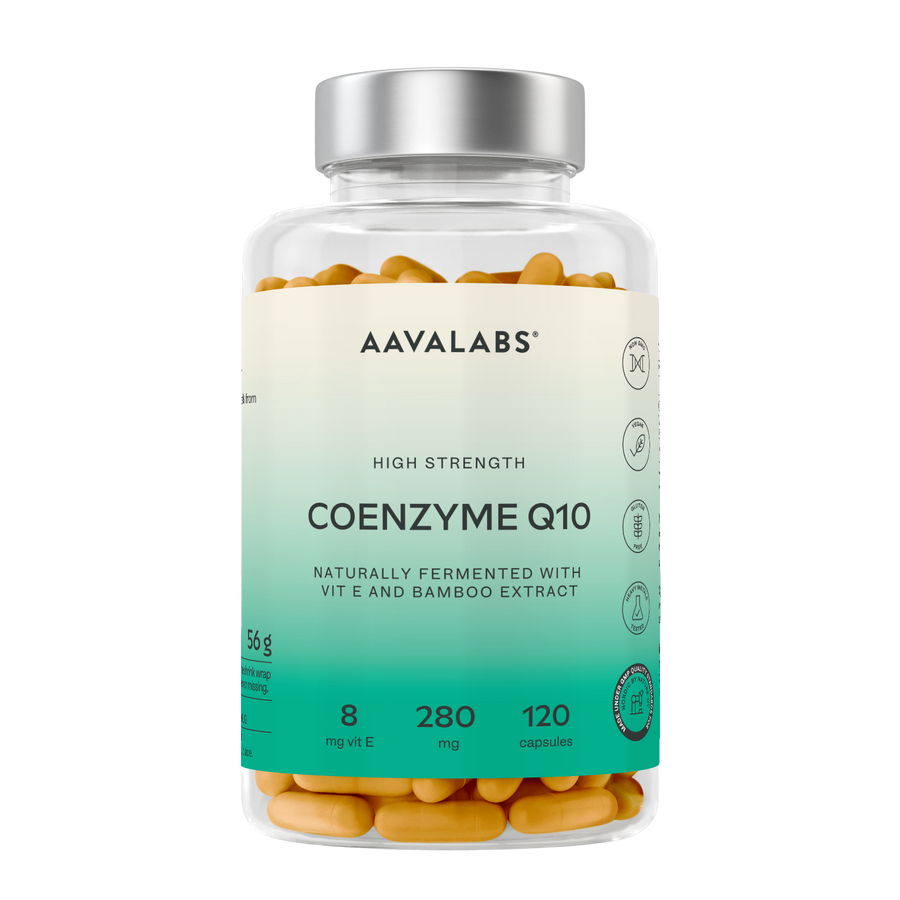
Our Coenzyme Q10 provides CoQ10 in a convenient format designed for daily supplementation.
Which Nutrients Are Relevant to Cardiovascular Health?
Cardiovascular health depends on much more than one nutrient. A balanced diet, regular physical activity, sufficient sleep, maintaining a healthy blood pressure and avoiding smoking are all important foundations.
Several nutrients also have established physiological roles relevant to cardiovascular function.
EPA and DHA contribute to the normal function of the heart when consumed at the required daily intake.
Magnesium contributes to normal muscle function, normal functioning of the nervous system and normal energy-yielding metabolism.
Vitamin B6, vitamin B12 and folate contribute to normal homocysteine metabolism.
Selenium contributes to the protection of cells from oxidative stress.
These nutrients perform different physiological functions and should be viewed as part of an overall balanced diet rather than as substitutes for one another.
Who Should Speak to a Healthcare Professional Before Taking CoQ10?
CoQ10 is generally well tolerated, but supplements can still interact with medications or be unsuitable in certain circumstances.
Speak to a healthcare professional before taking CoQ10 if you use prescription medication, have a cardiovascular condition, are being treated for high or low blood pressure, are pregnant or breastfeeding, or have another medical condition.
This is particularly important if you take anticoagulant medication such as warfarin or use medication that affects blood pressure.
CoQ10, Energy and Heart Health: The Bigger Picture
CoQ10 is fascinating because it sits at the intersection of two fundamental biological processes: cellular energy production and antioxidant activity.
Its role within mitochondria helps explain why it is found in high concentrations in metabolically active tissues and why researchers continue to investigate its potential relevance to cardiovascular health.
But heart health is never determined by a single nutrient. Regular movement, a balanced diet, sufficient sleep, stress management and appropriate medical care remain the foundations of cardiovascular wellbeing.
CoQ10 can be considered within that wider picture rather than as a standalone solution.
Frequently Asked Questions
What does CoQ10 do in the body?
CoQ10 participates in mitochondrial energy production, helping cells produce ATP. It also has antioxidant properties and helps protect cellular components from oxidative damage.
Why is CoQ10 associated with heart health?
The heart has very high and continuous energy requirements, and CoQ10 plays a role in mitochondrial energy production. Researchers have therefore investigated CoQ10 in several areas of cardiovascular health, including heart failure, endothelial function and blood pressure.
Does CoQ10 give you energy?
CoQ10 participates in the cellular processes responsible for producing ATP. This does not mean that taking CoQ10 functions like a stimulant or automatically increases subjective energy levels. Its role is within normal cellular energy metabolism.
Can CoQ10 lower blood pressure?
Some clinical trials and meta-analyses have investigated CoQ10 supplementation in people with hypertension and reported reductions in blood pressure, but findings across studies are not entirely consistent. CoQ10 should not replace prescribed blood pressure treatment.
Do statins lower CoQ10 levels?
Statins inhibit a biochemical pathway involved in both cholesterol and CoQ10 synthesis, and studies have found that statin therapy can reduce circulating CoQ10 concentrations. Whether everyone taking statins benefits from CoQ10 supplementation remains an area of research.
Should you take CoQ10 with food?
CoQ10 is fat-soluble, so taking a CoQ10 supplement alongside a meal containing dietary fat can support its absorption.
What is the difference between ubiquinol and ubiquinone?
Ubiquinone is the oxidised form of CoQ10 and ubiquinol is the reduced form. The body naturally converts between them. Both forms are available in supplements and have been studied scientifically.
Can you take CoQ10 every day?
CoQ10 supplements are commonly designed for regular daily use. Follow the recommended intake of your specific product and speak with a healthcare professional if you take medication or have a medical condition.