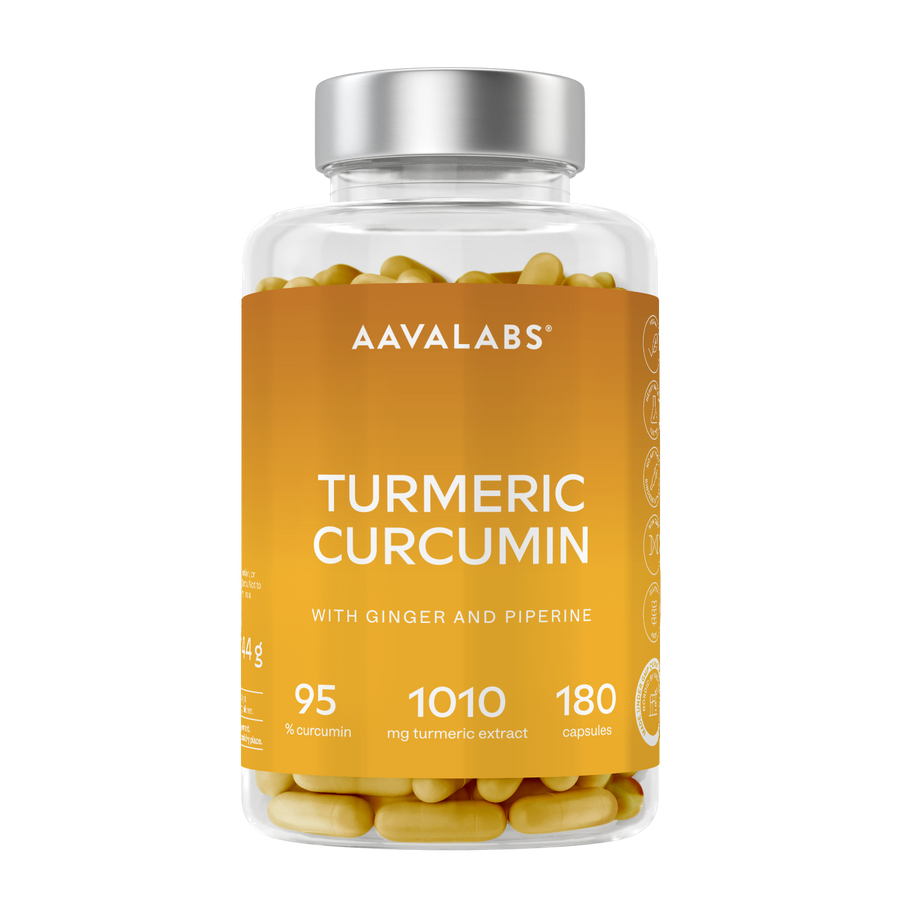
Discover what turmeric and curcumin are, how they differ, why curcumin absorption matters, and what research says about their potential benefits.
Turmeric has been used as a spice for centuries and has become one of the most widely researched botanicals in nutrition. Much of the scientific interest focuses on curcumin, one of the naturally occurring curcuminoids responsible for turmeric's characteristic golden colour.
Turmeric and curcumin are not the same thing, and understanding the difference can help you make more informed choices about food and supplements. Research continues to investigate curcumin in areas including oxidative processes, inflammatory pathways, joint health and digestion, although many of these potential effects are still being studied.
What is turmeric?
Turmeric, or Curcuma longa, is a plant belonging to the ginger family. Its underground stem, known as the rhizome, is commonly dried and ground into the bright yellow spice used in cuisines around the world.
Turmeric contains a group of naturally occurring plant compounds called curcuminoids. Curcumin is the best known and most extensively researched of these compounds.
Because ordinary turmeric contains only a relatively small proportion of curcuminoids, concentrated extracts such as those used in Curcumin Turmeric Complex can provide a more standardised amount than culinary turmeric alone.
What is the difference between turmeric and curcumin?
Turmeric refers to the whole plant or spice, while curcumin is one of the naturally occurring compounds found within turmeric.
This distinction is important when looking at scientific research. Many studies investigate concentrated curcumin or standardised curcuminoid extracts rather than the quantities typically consumed when turmeric is used as a culinary spice.
That means findings from studies using concentrated extracts should not automatically be applied to turmeric used in everyday cooking.
Why is curcumin so widely researched?
Curcumin has attracted considerable scientific interest because of the way it interacts with numerous biological pathways in laboratory and clinical research.
Researchers have investigated curcumin in relation to oxidative processes, inflammatory signalling, joint health, exercise recovery, digestive health and other areas of human health.
However, the strength of evidence differs considerably between these areas, and research into a biological mechanism does not necessarily mean that a supplement has been proven to prevent or treat a health condition.
What are antioxidants and how is curcumin related to them?
Oxidative stress occurs when the balance between reactive molecules such as free radicals and the body's antioxidant defences is disrupted. These processes occur naturally in the body and are influenced by numerous internal and environmental factors.
Curcumin has demonstrated antioxidant activity in experimental research, which is one reason it continues to attract scientific interest. Researchers are studying how these properties may relate to different aspects of human health.
A varied diet containing fruits, vegetables, herbs and spices remains an important way to obtain a broad range of naturally occurring plant compounds.
What is the relationship between curcumin and inflammation?
Inflammation is a normal biological response involved in processes such as immune defence and tissue repair. Scientists have extensively investigated curcumin's interaction with molecular pathways involved in inflammatory signalling.
This has led to considerable research interest in curcumin and turmeric extracts. However, turmeric supplements should not be presented as treatments for inflammatory diseases or as replacements for medical care.
Is curcumin being studied for joint health?
Yes. Joint health is one of the areas in which curcumin has received considerable research attention. Clinical studies have investigated standardised curcumin preparations in relation to measures such as joint comfort and mobility.
Results from individual studies depend on factors including the formulation, curcumin concentration, dose, study population and duration. More research is therefore useful for understanding which preparations and populations may benefit most.
Is turmeric good for digestion?
Turmeric has a long history of culinary use and has traditionally been associated with digestion in several cultures. Modern research is also exploring interactions between curcumin, the digestive system and the gut microbiome.
These areas remain active fields of research. For everyday digestive health, a varied diet containing sufficient fibre, adequate hydration and regular physical activity provides an important foundation.
Why is curcumin absorption important?
One of the main challenges with curcumin is its relatively low bioavailability when consumed on its own. Bioavailability describes how much of a substance reaches the circulation and becomes available for the body to use.
Curcumin is poorly absorbed and is also metabolised relatively quickly. For this reason, supplement formulations often use strategies designed to improve its bioavailability.
Why are curcumin and black pepper often combined?
Black pepper contains a naturally occurring compound called piperine. Piperine has been studied for its ability to increase the bioavailability of curcumin, which is why the two ingredients are frequently combined in supplements.
Our Curcumin Turmeric Complex combines turmeric-derived curcuminoids with black pepper extract as part of its formulation.
Bioavailability can vary considerably between formulations, so results from one specific curcumin and piperine preparation should not automatically be assumed to apply to every turmeric supplement.
Is turmeric in food the same as taking a curcumin supplement?
No. Using turmeric as a spice and taking a concentrated curcumin supplement provide very different amounts and forms of curcuminoids.
Culinary turmeric can be an enjoyable part of a varied diet and works well in curries, soups, rice dishes, roasted vegetables and drinks. Supplements, by comparison, are formulated to provide a specific and consistent amount of concentrated ingredients.
One does not necessarily need to replace the other. They simply serve different purposes within a daily routine.
How can you include turmeric in your daily routine?
There are several simple ways to incorporate turmeric into your diet. It can be added to curries, soups, lentil dishes, roasted vegetables, rice and warm drinks. Combining different herbs and spices also helps add variety to your diet.
If you choose a turmeric or curcumin supplement, check the ingredient list, recommended daily intake and formulation carefully. Different products can contain very different concentrations and forms of turmeric extracts.
Our Curcumin Turmeric Complex combines concentrated curcuminoids with additional ingredients in an easy-to-use daily formula.
Turmeric as part of a balanced lifestyle
Turmeric is much more than its distinctive golden colour. It contains a fascinating range of plant compounds, with curcumin becoming the focus of extensive scientific research.
Research continues to explore how curcumin interacts with the body, but no single botanical can replace the foundations of good health. A varied diet, regular movement, sufficient sleep and sustainable everyday routines remain the bigger picture.
Turmeric can simply be one colourful part of it.
Frequently Asked Questions
What is the difference between turmeric and curcumin?
Turmeric is the whole spice derived from the Curcuma longa plant. Curcumin is one of the naturally occurring curcuminoids found within turmeric and is the compound most frequently investigated in scientific research.
What are the potential benefits of curcumin?
Curcumin is being researched in relation to several areas, including oxidative processes, inflammatory signalling, joint health and digestion. The evidence varies depending on the health outcome, formulation and study population, so these areas should be considered ongoing fields of research rather than established therapeutic effects.
Why is black pepper added to curcumin supplements?
Black pepper contains piperine, a compound that has been studied for its ability to increase curcumin bioavailability. This is why black pepper extract is commonly included in curcumin supplement formulations.
Is turmeric the same as a curcumin supplement?
No. Culinary turmeric contains naturally occurring curcuminoids, including curcumin, but concentrated supplements can provide standardised amounts that differ substantially from those obtained when turmeric is used as a spice.
Can you take turmeric every day?
Turmeric is commonly consumed as part of the diet. Concentrated supplements are different from culinary amounts and should be taken according to the product directions. If you take medication, have an existing medical condition, are pregnant or breastfeeding, speak with a healthcare professional before using a concentrated supplement.
How long does curcumin take to work?
There is no universal timeframe because curcumin research uses different formulations, doses, study durations and health outcomes. Supplements should not be expected to produce an immediate or guaranteed effect, and individual responses can vary.
Is curcumin well absorbed?
Curcumin naturally has relatively low bioavailability when consumed on its own. This is why researchers and supplement manufacturers have investigated different formulation strategies, including combining curcumin with piperine from black pepper.
Can turmeric replace anti-inflammatory medication?
No. Turmeric or curcumin supplements should not be used as a replacement for prescribed medication or medical treatment. Anyone managing an inflammatory condition or considering changes to medication should speak with a qualified healthcare professional.