Your gut and brain are constantly communicating. Learn how probiotics interact with the gut microbiome, how the gut-brain axis works and why different probiotic strains can play different roles in digestive health and wellbeing.
Your gut does much more than digest food. It is home to trillions of microorganisms that form the gut microbiome, an ecosystem that interacts with digestion, the immune system and even the brain.
Probiotics are live microorganisms that can interact with this ecosystem. At the same time, growing research into the gut-brain axis is revealing just how closely digestive processes and the nervous system communicate.
So what do probiotics actually do in the gut, how does the gut-brain connection work and why do individual probiotic strains matter?
What Are Probiotics?
Probiotics are live microorganisms that, when administered in adequate amounts, confer a health benefit on the host. They include specific strains of bacteria and yeasts and can be found in certain fermented foods and dietary supplements.
Some of the best-known probiotic bacteria belong to groups such as Lactobacillus and Bifidobacterium, although different species and strains can have very different characteristics.
This distinction matters. The word "probiotic" describes a broad category rather than one single ingredient, and the effects observed with one probiotic strain cannot automatically be assumed for another.
What Is the Gut Microbiome?
The gut microbiome is the community of microorganisms living in the gastrointestinal tract. It includes bacteria, viruses, fungi and other microbes.
Rather than simply living alongside us, these microorganisms interact continuously with the body. They participate in the metabolism of components of our diet, produce various metabolites and interact with the intestinal barrier and immune system.
Every person's microbiome is different. Diet, age, environment, medication use and many other factors can influence its composition.
This is one reason gut health is much more complex than simply dividing bacteria into "good" and "bad" categories.
How Do Probiotics Interact With the Gut?
Different probiotics can interact with the digestive system in different ways. Their effects depend on the specific strain, amount consumed and individual taking them.
Researchers have investigated probiotic strains for their interactions with the intestinal environment, other microorganisms and the gut barrier.
Importantly, probiotic microorganisms do not necessarily become permanent residents of the gut. Many pass through the digestive system temporarily, which is why probiotic research often focuses on regular consumption rather than permanent colonisation.
What Is the Gut-Brain Axis?
The gut and brain communicate through a complex, bidirectional system known as the gut-brain axis.
This communication involves several interconnected systems, including the nervous system, immune system, endocrine system and compounds produced by the gut microbiome.
One important pathway is the vagus nerve, which carries signals between the digestive system and the brain. But the gut-brain axis extends far beyond a single nerve.
Microorganisms in the gut can also produce or influence metabolites and signalling molecules that interact with different systems throughout the body.
This has made the gut-brain axis an important and rapidly developing area of scientific research.
What Does Serotonin Have to Do With the Gut?
One of the most fascinating facts about the gut-brain connection involves serotonin.
A large proportion of the body's serotonin is produced in the gastrointestinal tract, primarily by specialised cells called enterochromaffin cells.
However, this does not mean that serotonin produced in the gut simply travels directly into the brain and improves mood. Peripheral serotonin and serotonin within the central nervous system are regulated differently, and serotonin does not freely cross the blood-brain barrier.
Instead, the relationship between the microbiome, serotonin metabolism and the nervous system is considerably more complex and remains an active area of research.
Can Gut Bacteria Influence the Brain?
Research suggests that microorganisms in the gut can influence signalling pathways involved in communication between the digestive system and the brain.
One mechanism involves microbial metabolites. When gut bacteria metabolise components of food, particularly dietary fibre, they can produce compounds such as short-chain fatty acids.
Researchers are investigating how these metabolites interact with the intestinal barrier, immune system and nervous system.
The microbiome may also interact with pathways involving tryptophan, a dietary amino acid used by the body in several metabolic processes.
These findings help explain why scientists increasingly study the microbiome not as an isolated digestive ecosystem, but as part of a much wider network within the body.
What Are Psychobiotics?
You may increasingly encounter the term psychobiotics when reading about probiotics and the gut-brain axis.
The term is used in scientific research to describe certain microorganisms that are being investigated for their potential influence on communication between the gut and brain.
Studies have explored specific probiotic strains in relation to stress, mood and cognitive outcomes. However, this field is still developing and findings from one strain cannot automatically be applied to all probiotics.
Probiotics should therefore not be viewed as treatments for anxiety, depression or other mental health conditions.
Why Do Probiotic Strains Matter?
Two probiotic products can contain completely different microorganisms even when both are labelled as probiotics.
A probiotic is usually identified at several levels, including its genus, species and strain. Different strains can have different properties and have been studied for different purposes.
This means that simply looking at the total number of bacteria or the number of strains does not tell you everything about a probiotic supplement.
When comparing products, it can be useful to look at the specific microorganisms included, the number of colony-forming units or CFU, storage requirements and the overall formulation.
What Does CFU Mean in a Probiotic Supplement?
CFU stands for colony-forming units. It is a measurement used to estimate the number of viable microorganisms in a probiotic product.
You may see probiotic supplements containing millions or billions of CFU.
However, a larger CFU number does not automatically mean that a product is better. The identity of the strains, their viability and the formulation as a whole are also important considerations.
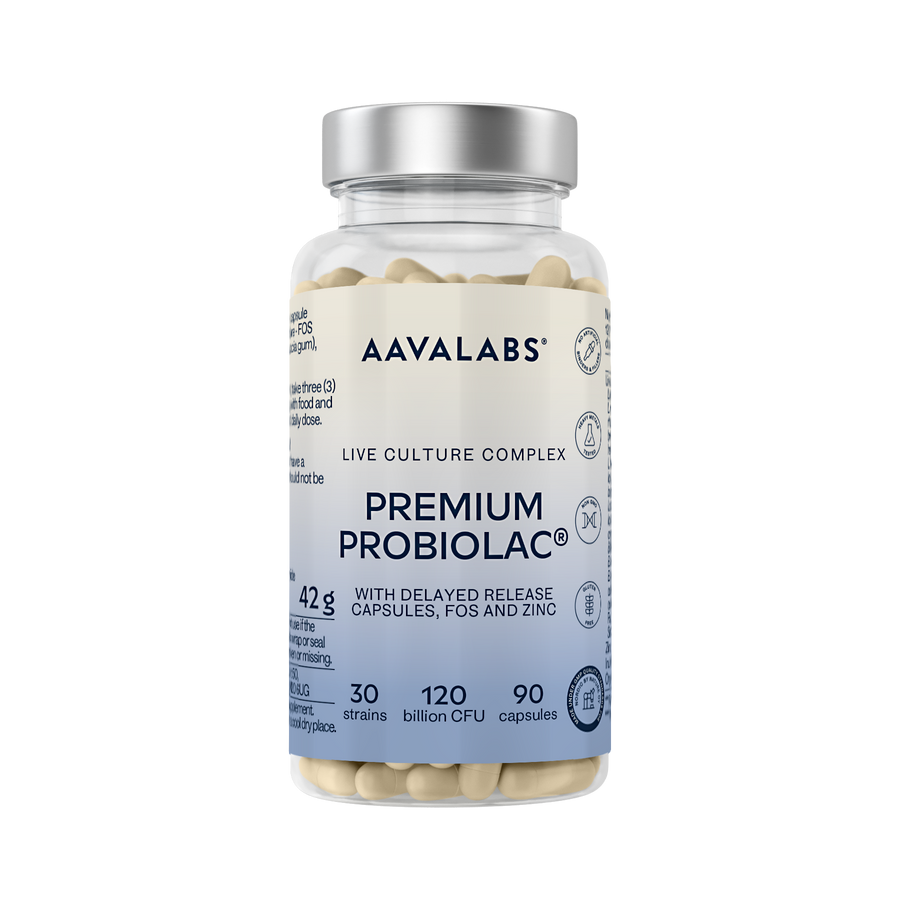
Our Premium Probiolac combines multiple bacterial strains in a multi-strain probiotic formula.
What Is the Difference Between Probiotics and Prebiotics?
Probiotics and prebiotics are related, but they are not the same thing.
Probiotics are live microorganisms.
Prebiotics are substrates that are selectively utilised by host microorganisms and confer a health benefit. Certain types of dietary fibre can act as prebiotics.
Foods containing fibres that can be utilised by gut microorganisms include onions, garlic, leeks, oats, legumes and certain fruits and vegetables.
Some probiotic supplements also combine microorganisms with prebiotic ingredients.
How Can You Support Your Gut Microbiome Through Diet?
Probiotic supplements are only one part of the gut-health picture. Your everyday diet provides the environment in which the gut microbiome exists.
A varied diet containing different plant foods provides a broad range of fibres and other compounds that gut microorganisms can metabolise.
Whole grains, legumes, vegetables, fruits, nuts and seeds can all contribute to dietary diversity.
Fermented foods such as yoghurt, kefir, sauerkraut, kimchi and miso can also introduce microorganisms and fermentation products into the diet.
Rather than searching for one perfect "gut health food", variety is a useful principle when building a microbiome-friendly diet.
What Can Disrupt the Gut Microbiome?
The microbiome is dynamic and can change in response to many aspects of everyday life.
Antibiotics can have a particularly noticeable effect because they target bacteria and can alter microbial communities within the digestive system.
Diet, travel, infections, age and other medications can also influence the composition of the microbiome.
These changes do not necessarily mean that the microbiome has become permanently unhealthy. The gut ecosystem is constantly adapting to its environment.
Should You Take Probiotics Every Day?
Whether a probiotic should be taken daily depends on the specific product and its intended use.
Many probiotic supplements are formulated for regular consumption because the microorganisms they contain do not necessarily establish permanent populations in the digestive tract.
Follow the recommended intake provided with your specific supplement.
If you have a medical condition, a significantly weakened immune system or are taking medication, speak with a healthcare professional before introducing a probiotic supplement.
The Gut and Brain Are Part of the Same Conversation
The most interesting lesson from gut-brain research may be that different systems in the body cannot always be understood in isolation.
The gut microbiome interacts with the digestive system, immune system, nervous system and numerous metabolic pathways. At the same time, the brain communicates continuously with the digestive tract through neural, hormonal and immune pathways.
Probiotics offer one way to introduce specific microorganisms into this complex ecosystem, but their effects depend on the individual strains and formulation.
Supporting the gut therefore goes beyond taking one supplement. A varied diet, sufficient fibre, regular movement, sleep and other everyday habits all form part of the wider picture.
Frequently Asked Questions
What are probiotics?
Probiotics are live microorganisms that, when administered in adequate amounts, confer a health benefit on the host. Different probiotic species and strains can have different properties.
What is the gut-brain axis?
The gut-brain axis is the bidirectional communication network connecting the gastrointestinal system and the brain. It involves neural pathways such as the vagus nerve as well as immune, hormonal and microbial signalling.
Does the gut produce serotonin?
Yes. A large proportion of the body's serotonin is produced in the gastrointestinal tract. However, gut-derived serotonin does not simply travel into the brain because serotonin does not freely cross the blood-brain barrier. The relationship between gut microbes, serotonin metabolism and brain function is more complex.
Can probiotics improve your mood?
Researchers are investigating specific probiotic strains and their potential influence on the gut-brain axis, including outcomes related to mood and stress. Evidence varies considerably between strains and populations, and probiotics should not be considered a treatment for mental health conditions.
What is the difference between probiotics and prebiotics?
Probiotics are live microorganisms, while prebiotics are substrates selectively used by microorganisms that confer a health benefit. Some probiotic supplements combine both.
What does CFU mean?
CFU stands for colony-forming units and is used to estimate the number of viable microorganisms in a probiotic product. A higher CFU number does not automatically make one probiotic better than another.
Are more probiotic strains always better?
No. The number of strains is only one characteristic of a probiotic formula. The identity of the individual strains, their viability, the amount provided and the overall formulation are also important.
Do probiotics permanently stay in your gut?
Not necessarily. Many probiotic microorganisms pass through the digestive system without permanently colonising it. This is one reason many probiotic products are designed for regular consumption.