
Article: Spirulina vs chlorella: What’s the difference and can you take them together?

Spirulina vs chlorella: What’s the difference and can you take them together?
Spirulina and chlorella are two of the best known ingredients in the world of green supplements. Both are microscopic organisms with naturally occurring nutrients, but despite often appearing together in supplements, they are not the same.
So what is the difference between spirulina and chlorella, what do they contain, and does it make sense to take them together? In this guide, we compare their characteristics, nutritional profiles and practical uses.
Quick answer: Spirulina and chlorella are nutrient rich microorganisms commonly used in food supplements. Spirulina is a type of cyanobacteria, while chlorella is a green freshwater microalga. Both naturally contain protein, pigments and various micronutrients, although their exact nutritional composition depends on how they are grown and processed.
What are spirulina and chlorella?
Spirulina and chlorella are both commonly described as algae in everyday language, but biologically they are different.
Spirulina refers to cyanobacteria, sometimes called blue green algae. Chlorella, on the other hand, is a single celled green freshwater microalga.
Both use photosynthesis to grow and are cultivated commercially for use in powders, tablets, capsules and other nutritional products.
What is spirulina?
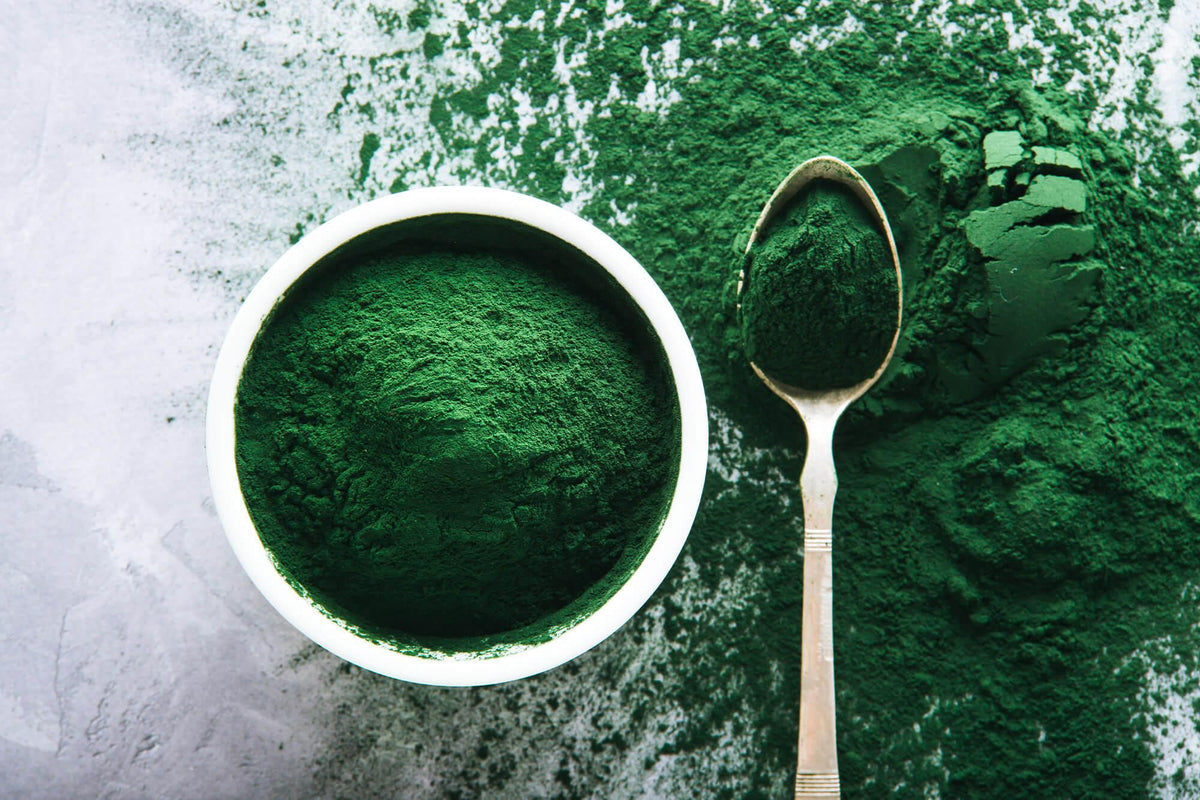
Spirulina is a type of cyanobacteria with a characteristic blue green appearance. Its colour comes from naturally occurring pigments, including chlorophyll and phycocyanin.
Dried spirulina contains protein and a range of naturally occurring nutrients. Its exact nutritional profile depends on factors including the species, cultivation conditions and processing methods.
Spirulina has been consumed as a food source for centuries and today is widely used in food supplements and green powders.
What is chlorella?
Chlorella is a microscopic single celled green freshwater alga. Its intense green colour comes from its chlorophyll content.
Like spirulina, dried chlorella naturally contains protein alongside a range of other nutrients and compounds.
One important characteristic of chlorella is its relatively resistant cell wall. This is why many supplements use broken cell wall or cracked cell wall chlorella, which has been processed to make the contents of the cells more accessible during digestion.
What is the difference between spirulina and chlorella?
Although spirulina and chlorella are often grouped together, there are several important differences between them.
They are different organisms
Chlorella is a green microalga, while spirulina is a type of cyanobacteria.
They contain different pigments
Both contain chlorophyll, but spirulina also contains phycocyanin, the blue pigment responsible for its characteristic blue green colour.
Their cellular structures are different
Chlorella has a resistant cell wall that is commonly processed before consumption. Spirulina has a different cellular structure and does not require the same type of cell wall processing.
Their nutritional profiles differ
Both naturally contain protein and various micronutrients, but the amounts and types of nutrients present are not identical.
Composition can also vary considerably between individual products, so the nutritional information of the specific supplement matters more than general statements about spirulina or chlorella.
Are spirulina and chlorella good sources of protein?
Both dried spirulina and chlorella can contain a relatively high proportion of protein by weight.
However, there is an important distinction between the percentage of protein in dried algae and the amount you actually consume in a daily serving.
If you take only a few grams per day, the contribution to your total daily protein intake may be relatively small compared with conventional protein rich foods.
If protein intake is your goal, check the grams of protein provided by the recommended daily serving rather than relying on the percentage of protein in the raw ingredient.
Do spirulina and chlorella contain iron?
Both spirulina and chlorella can naturally contain iron, although the amount varies between products.
Iron contributes to normal oxygen transport in the body, normal formation of red blood cells and haemoglobin, normal energy yielding metabolism and the reduction of tiredness and fatigue.
Whether a particular spirulina or chlorella supplement provides a nutritionally significant amount of iron depends on the actual quantity contained in the recommended daily serving.
Do spirulina and chlorella contain vitamin B12?
This is an important question, particularly for people following plant based diets.
Algae and vitamin B12 can be complicated because not all vitamin B12 like compounds found in these ingredients necessarily provide the same nutritional value.
Some chlorella products may contain vitamin B12, but concentrations and forms can vary considerably depending on cultivation and processing.
Spirulina should not automatically be considered a reliable source of active vitamin B12.
If vitamin B12 intake is important to you, check the nutritional information of the specific product rather than relying on spirulina or chlorella in general.
Do spirulina and chlorella detox the body?
Detoxification is one of the most common claims associated with spirulina and chlorella, particularly chlorella.
Your body already has sophisticated systems for processing and eliminating substances, involving organs including the liver and kidneys.
Research has investigated chlorella and spirulina in relation to various environmental substances and physiological processes, but this does not establish either ingredient as a general detox treatment.
Claims that chlorella simply binds heavy metals and removes them from the body therefore oversimplify the available evidence.
If you are concerned about exposure to heavy metals or other toxic substances, seek appropriate medical assessment rather than attempting to treat the exposure with supplements.
Do spirulina and chlorella give you more energy?
Spirulina and chlorella are often marketed as natural energy boosters, but neither should be thought of as a stimulant that immediately increases energy levels.
Instead, look at the specific nutrients provided by the individual product.
For example, if a product contains a nutritionally significant amount of iron, iron contributes to normal energy yielding metabolism and to the reduction of tiredness and fatigue.
This is different from claiming that spirulina or chlorella themselves provide an instant energy boost.
Do spirulina and chlorella support the immune system?
Research has investigated both spirulina and chlorella in relation to different aspects of immune function.
However, broad claims that either ingredient boosts or strengthens immunity go beyond what should be assumed from their presence in a supplement.
Instead, consider the specific nutrients contained in the product and their established nutritional roles.
Are spirulina and chlorella antioxidants?
Spirulina and chlorella contain naturally occurring pigments and other compounds that have attracted scientific interest.
Spirulina contains phycocyanin, while chlorella is particularly known for its chlorophyll content.
However, describing a food or supplement as containing compounds with antioxidant properties is not the same as demonstrating a specific health effect in people.
If a product contains meaningful amounts of nutrients such as vitamin C, vitamin E, zinc or selenium, their authorised roles in protecting cells from oxidative stress can be considered separately.
Can you take spirulina and chlorella together?
Yes, spirulina and chlorella are commonly combined in food supplements.
Because they are different ingredients with different compositions, combining them can provide a broader mixture of naturally occurring nutrients and compounds.
However, taking both does not automatically make a supplement more effective. The quality, amounts and complete nutritional composition of the product still matter.
How can you take spirulina and chlorella?
Spirulina and chlorella are available in several forms:
- Powders
- Tablets
- Capsules
- Combined algae supplements
Powders can be added to smoothies or other foods and drinks, while tablets and capsules provide an alternative for people who prefer not to taste the algae directly.
Always follow the recommended intake for the specific product you are using.
What should you look for in a spirulina and chlorella supplement?
The quality of microalgae supplements matters. When comparing products, look beyond front of pack claims and consider how clearly the manufacturer explains what is actually inside.
Check the species
Look for clear information about the spirulina and chlorella used in the formulation.
Check the amount per serving
Compare the actual amount provided by the recommended daily serving rather than simply looking at the number of tablets or capsules.
Look at the nutritional information
If you are interested in a particular vitamin or mineral, check how much the product actually provides per daily serving.
Check how the chlorella is processed
Broken cell wall chlorella has been processed to make the contents of the cells more accessible during digestion.
Consider quality and testing
Because microalgae are cultivated in water based environments, sourcing, cultivation conditions and quality control are important considerations.
Choose manufacturers that provide clear information about their ingredients, manufacturing standards and quality testing.
Frequently asked questions
Are spirulina and chlorella the same?
No. Chlorella is a green freshwater microalga, while spirulina is a type of cyanobacteria. They differ in their biological classification, cellular structure, pigments and nutritional composition.
Which is better, spirulina or chlorella?
There is no universal answer because they are different ingredients. The better choice depends on the composition of the individual product, your diet and what you are looking for in a supplement.
Can you take spirulina and chlorella together?
Yes. They are frequently combined in supplements and can be consumed together when used according to the recommended intake.
Do spirulina and chlorella contain protein?
Yes. Both can contain a relatively high proportion of protein when measured by dry weight. However, the amount of protein provided by a daily supplement serving may be considerably smaller.
Do spirulina and chlorella contain vitamin B12?
The answer depends on the ingredient and product. Some chlorella products may contain vitamin B12, although amounts and forms can vary. Spirulina should not automatically be considered a reliable source of active vitamin B12.
Do spirulina and chlorella detox heavy metals?
Both ingredients have been researched in relation to different substances, but they should not be considered treatments for heavy metal exposure or poisoning. Suspected exposure requires appropriate medical assessment.
What is broken cell wall chlorella?
Broken cell wall chlorella has undergone processing to make the contents of its cells more accessible during digestion.
Key takeaways
- Spirulina and chlorella are different microorganisms despite often being grouped together.
- Spirulina is a type of cyanobacteria, while chlorella is a green freshwater microalga.
- Both naturally contain protein, pigments and various micronutrients, but their exact composition varies.
- The amount of nutrients provided per daily serving matters more than general claims about the raw ingredient.
- Spirulina should not automatically be considered a reliable source of active vitamin B12.
- Claims that spirulina or chlorella detoxify the body should be treated cautiously.
- Spirulina and chlorella can be taken together and are frequently combined in supplements.
- Species, sourcing, processing, nutritional composition and quality testing are useful factors to consider when choosing a supplement.
Two greens, different characteristics
Spirulina and chlorella may look similar at first glance, but understanding their differences makes it easier to see why they are often combined.
Rather than viewing them as miracle superfoods or detox solutions, think of them as nutrient rich ingredients that can complement a varied and balanced diet.
If you choose a supplement, focus on what the individual product actually provides, where its ingredients come from and how its quality is controlled.
Our Spirulina & Chlorella Complex combines both algae in one formula for an easy way to incorporate them into your daily routine.
This article is for informational purposes only and is not intended to diagnose, treat, cure or prevent any disease. Food supplements should not be used as a substitute for a varied, balanced diet and healthy lifestyle. If you are pregnant, breastfeeding, taking medication or have a medical condition, consult an appropriate healthcare professional before using supplements.
Read more

What is CoQ10 and what does it do?
CoQ10 is a naturally occurring compound involved in cellular energy production and antioxidant processes in the body. Although the body produces CoQ10 itself, levels can vary with factors such as a...
Read more
SIGN UP FOR OUR NEWSLETTER TO GET 10% OFF YOUR FIRST ORDER
By signing up, you acknowledge that providing information services and products to you involves us processing your personal data. You can read more about how we collect, process and store personal data in our Privacy Policy.