Lion’s Mane is a distinctive functional mushroom with a long history of traditional use. Discover what Lion’s Mane is, its naturally occurring compounds, why researchers are interested in its potential relationship with cognitive health, and what to look for in a Lion’s Mane supplement.
With its distinctive white, cascading appearance, Lion’s Mane (Hericium erinaceus) is one of the most recognisable functional mushrooms. It also has a long history of traditional use in East Asia and has become increasingly popular in modern wellness routines.
Much of today’s interest in Lion’s Mane centres around its naturally occurring bioactive compounds and their potential relationship with the brain, nervous system and other areas of health.
But what does the research actually tell us? Let’s explore what Lion’s Mane is, what makes it interesting and what to consider when adding it to your routine.
What Is Lion’s Mane?
Lion’s Mane, scientifically known as Hericium erinaceus, is an edible mushroom recognised by its long, white spines that resemble a lion’s mane.
It grows naturally on hardwood trees and has traditionally been consumed as both a food and as part of traditional practices in several Asian cultures.
Today, Lion’s Mane can be found in different forms, including whole mushroom powders, extracts, capsules and drink blends.
What Makes Lion’s Mane Interesting?
Lion’s Mane contains a variety of naturally occurring compounds, including polysaccharides and other bioactive substances.
Two groups of compounds that have attracted particular scientific interest are hericenones and erinacines.
Laboratory and preclinical research has investigated how certain compounds found in Lion’s Mane may interact with processes involving nerve growth factor (NGF), a protein involved in the growth, maintenance and survival of certain nerve cells.
However, findings from laboratory or animal research cannot automatically be translated into health benefits in humans. Human research into Lion’s Mane is still developing.
Lion’s Mane and Cognitive Function
One of the main reasons people are interested in Lion’s Mane is its potential relationship with cognitive function.
Some human studies have explored Lion’s Mane in relation to areas such as memory, cognitive performance and mental function. While these findings have generated interest, the evidence remains limited and further high-quality research is needed.
Lion’s Mane should therefore not be presented as a proven treatment or preventative measure for cognitive decline or neurological conditions.
Lion’s Mane and the Nervous System
Research into Lion’s Mane also explores its interaction with the nervous system, particularly because of compounds such as hericenones and erinacines.
Much of this research is still experimental. While the mechanisms being investigated are interesting, more human studies are needed to understand their practical relevance.
This distinction is important when evaluating functional mushrooms: promising biological mechanisms do not necessarily mean that a specific health effect has been established in humans.
Does Lion’s Mane Support the Immune System?
Like many mushrooms, Lion’s Mane contains polysaccharides, including beta-glucans. These compounds are one reason researchers are interested in the relationship between mushrooms and immune function.
However, research into Lion’s Mane specifically and immune outcomes in humans remains limited.
For established nutritional support of normal immune function, nutrients such as vitamin C, vitamin D, zinc and selenium have authorised health claims in the EU.
What About Lion’s Mane and Gut Health?
The relationship between mushrooms, their polysaccharides and the gut microbiome is another growing area of research.
Preclinical studies have investigated how compounds found in Lion’s Mane may interact with gut bacteria and the gastrointestinal environment.
At present, however, it would be premature to describe Lion’s Mane as a proven way to improve digestion, balance the microbiome or increase nutrient absorption.
Lion’s Mane, Mood and Stress
Researchers have also investigated Lion’s Mane in relation to psychological well-being, stress and mood.
Some small human studies have reported interesting findings, but the evidence base is not yet strong enough to establish Lion’s Mane as a treatment for anxiety, depression or other mental health conditions.
If you are experiencing persistent changes in mood, anxiety or other mental health symptoms, speak with an appropriate healthcare professional rather than relying on a supplement.
How to Choose a Lion’s Mane Supplement
Not all Lion’s Mane supplements are identical. Products can differ significantly depending on the raw material, extraction method and concentration.
When comparing Lion’s Mane supplements, consider:
- Whether the product contains mushroom powder or a concentrated extract
- The extraction ratio or concentration
- The amount provided per daily serving
- Whether additional functional mushrooms or nutrients are included
- Testing and quality standards
- Whether the ingredient list is transparent
These details can help you understand what you are actually getting rather than choosing a supplement based solely on a large number printed on the front of the packaging.
Lion’s Mane in Your Daily Routine
Lion’s Mane supplements are commonly available as capsules, powders and extracts, making them relatively easy to incorporate into an existing routine.
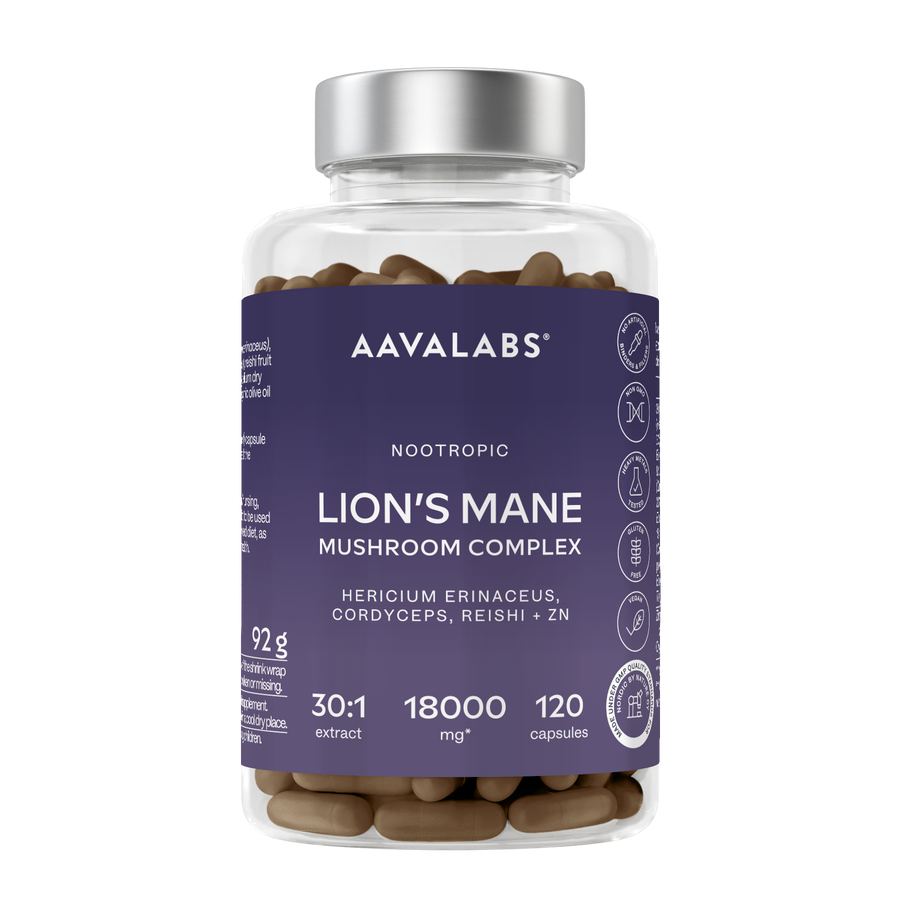
Our Lion’s Mane formula combines a concentrated 30:1 Lion’s Mane extract with Reishi and Cordyceps in vegan capsules.
As with any supplement, follow the recommended daily intake and consider your individual circumstances. If you are pregnant, breastfeeding, taking medication or managing a medical condition, speak with a healthcare professional before using a new supplement.
A Fascinating Mushroom with Growing Research
Lion’s Mane is an interesting functional mushroom with a long history of traditional use and a growing body of modern research.
Its naturally occurring compounds, including hericenones, erinacines and polysaccharides, have made it particularly interesting to researchers studying the brain, nervous system and other areas of human health.
At the same time, it is important to separate promising early research from established health benefits. Human evidence is still developing, and many popular claims surrounding Lion’s Mane go further than current research can confidently support.
For now, Lion’s Mane is best viewed as an intriguing functional mushroom rather than a quick fix for memory, immunity, mood or cognitive performance.