Ashwagandha is one of the most studied adaptogens in modern research. Here is what the clinical evidence says about its benefits for stress, anxiety, energy, cognition and hormonal health.
Long before "adaptogen" became a wellness buzzword, one root had already been used for thousands of years to help the body cope with stress: ashwagandha.
Ashwagandha (Withania somnifera) is one of the most extensively studied adaptogenic herbs in modern research. Its most well-supported benefits include reducing cortisol and anxiety, improving cognitive function and memory, boosting energy and physical stamina, supporting hormonal balance and libido, and strengthening immune function.
In this guide, we'll explain what ashwagandha is, how it works, what the research actually shows and how to take it for best results.
Quick Answer
Ashwagandha is an adaptogenic herb used in Ayurvedic medicine for over 3,000 years. Its best-supported benefits include lower cortisol and anxiety, improved cognitive function and memory, greater energy and stamina, hormonal and libido support, and stronger immune function. The KSM-66 extract, the most clinically studied form, consistently produces these results in randomised controlled trials after 4 to 8 weeks of daily use.
In This Guide
- What is ashwagandha and why has it been used for 3,000 years?
- How does ashwagandha reduce stress and anxiety?
- Can ashwagandha improve cognitive function and memory?
- How does ashwagandha boost energy and physical stamina?
- Does ashwagandha support hormonal balance and libido?
- How does ashwagandha strengthen the immune system?
- How should you take ashwagandha for best results?
- Common myths about ashwagandha
- Frequently asked questions
Key Takeaways
- Ashwagandha is an adaptogen that helps regulate the body's stress response via the HPA axis, lowering cortisol.
- Research supports benefits for stress, anxiety, memory, cognitive performance, energy, hormonal balance and immune function.
- KSM-66 is the most clinically studied extract, backed by over 22 clinical trials.
- Benefits build gradually, with initial effects around 2 to 4 weeks and fuller effects at 6 to 8 weeks of consistent use.
- It can be taken in the morning for energy and focus, or in the evening to support relaxation and sleep.
What Is Ashwagandha and Why Has It Been Used for 3,000 Years?
Ashwagandha, scientifically known as Withania somnifera, is a powerful adaptogenic herb deeply rooted in Ayurvedic medicine. Also known as Indian ginseng or Winter Cherry, it has been a fundamental part of India's traditional holistic healing system for over 3,000 years. The name derives from Sanskrit: ashwa meaning horse and gandha meaning smell, referencing both its distinctive aroma and its traditional association with the strength and vitality of a stallion.
In Ayurveda, ashwagandha is classified as a Rasayana, a class of herbs that promote longevity, vitality and overall wellbeing. It's used to support the nervous system, enhance mental clarity, boost memory, improve physical stamina and promote restful sleep. Modern clinical research has validated many of these traditional uses with robust scientific evidence.
Ashwagandha's Sanskrit name references the smell and strength of a horse, reflecting its traditional reputation for building vitality and stamina.
How Does Ashwagandha Reduce Stress and Anxiety?
One of the most well-documented benefits of ashwagandha is its ability to reduce stress and anxiety. As an adaptogen, it helps the body regulate its response to stressors, both physical and emotional, by modulating the hypothalamic-pituitary-adrenal (HPA) axis, the central stress response system. This results in lower cortisol levels and a measurably calmer state of mind.
Multiple randomised controlled trials have found that ashwagandha KSM-66 significantly reduces serum cortisol, lowers anxiety scores and improves subjective stress perception compared to placebo after 4 to 8 weeks of consistent use. Regular supplementation builds resilience to stress over time rather than providing a sedating effect.
Ashwagandha doesn't sedate the nervous system. It works by helping regulate the HPA axis, the same system that governs your body's cortisol response.
Can Ashwagandha Improve Cognitive Function and Memory?
Yes. Ashwagandha has neuroprotective properties that help protect brain cells from oxidative damage and support overall brain health. Research has found improvements in reaction time, attention, information processing speed and both immediate and general memory in adults taking ashwagandha compared to placebo. These cognitive benefits appear to be linked to reduced cortisol, improved mitochondrial function and the herb's direct antioxidant effects on neural tissue.
How Does Ashwagandha Boost Energy and Physical Stamina?
Ashwagandha supports energy production by optimising adrenal function and improving mitochondrial efficiency. By helping to regulate cortisol, it prevents the energy-draining effects of chronic stress and allows the body to allocate resources more effectively. Clinical studies have found that ashwagandha supplementation improves cardiorespiratory endurance, muscle strength and recovery in both athletes and healthy adults. It provides a sustainable energy lift rather than the sharp spike and crash associated with stimulants.
Does Ashwagandha Support Hormonal Balance and Libido?
Ashwagandha has been shown to support hormonal balance in both men and women. In men, it's associated with increased testosterone levels and improved sperm quality. In women, it may help manage hormonal fluctuations, particularly during periods of high stress when cortisol can suppress reproductive hormones. By positively influencing the hormonal environment, ashwagandha may improve libido and overall sexual health in both sexes.
How Does Ashwagandha Strengthen the Immune System?
Ashwagandha is rich in antioxidants including withanolides, the active compounds that give the herb many of its distinctive properties. These antioxidants help neutralise free radicals that damage immune cells and tissues. Ashwagandha also modulates immune function by stimulating the activity of natural killer cells and other immune cell populations. By reducing cortisol, which chronically suppresses immune function, ashwagandha provides a second layer of immune support through stress regulation.
| Area | How Ashwagandha Helps |
|---|---|
| Stress & anxiety | Lowers cortisol via HPA axis regulation |
| Cognitive function | Supports reaction time, attention, memory |
| Energy & stamina | Optimises adrenal function, mitochondrial efficiency |
| Hormonal balance | Supports testosterone and reproductive hormone balance |
| Immune function | Antioxidant support, natural killer cell activity |
How Should You Take Ashwagandha for Best Results?
Our Ashwagandha KSM-66 is made from high-quality organic ashwagandha roots using the KSM-66 extraction process, the most clinically studied form of ashwagandha with the strongest evidence base. Each serving provides a standardised dose to support stress reduction, cognitive function, energy, hormonal balance and immune health.
Ashwagandha can be taken in the morning for energy and cognitive support, or in the evening to promote relaxation and sleep quality. Consistent daily use over at least 4 weeks is necessary to experience the full cumulative benefits.
Common Myths About Ashwagandha
Ashwagandha's popularity has brought a lot of oversimplified claims along with it. Here are some of the most common myths, explained.
Myth: Ashwagandha works like a sedative or sleep aid.
Fact: Ashwagandha doesn't sedate the nervous system directly. It helps regulate the HPA axis and lower cortisol, which can support better sleep quality over time, but it works through stress regulation rather than acting as a sedative.
Myth: You'll feel the effects immediately.
Fact: Ashwagandha is a cumulative adaptogen. Most people notice initial improvements in stress resilience and mood within 2 to 4 weeks, with fuller effects on cortisol, cognition and stamina developing over 6 to 8 weeks.
Myth: Ashwagandha is only for men, or only boosts testosterone.
Fact: Research supports benefits for both sexes, including stress reduction, energy, sleep quality and hormonal support. In women, it doesn't raise testosterone to problematic levels at standard doses.
Myth: All ashwagandha supplements are equally effective.
Fact: The extraction method matters. KSM-66 is a standardised, full-spectrum extract backed by over 22 clinical trials, while other extracts may vary considerably in their concentration of active withanolides and the evidence supporting them.
Ready to Try Ashwagandha?
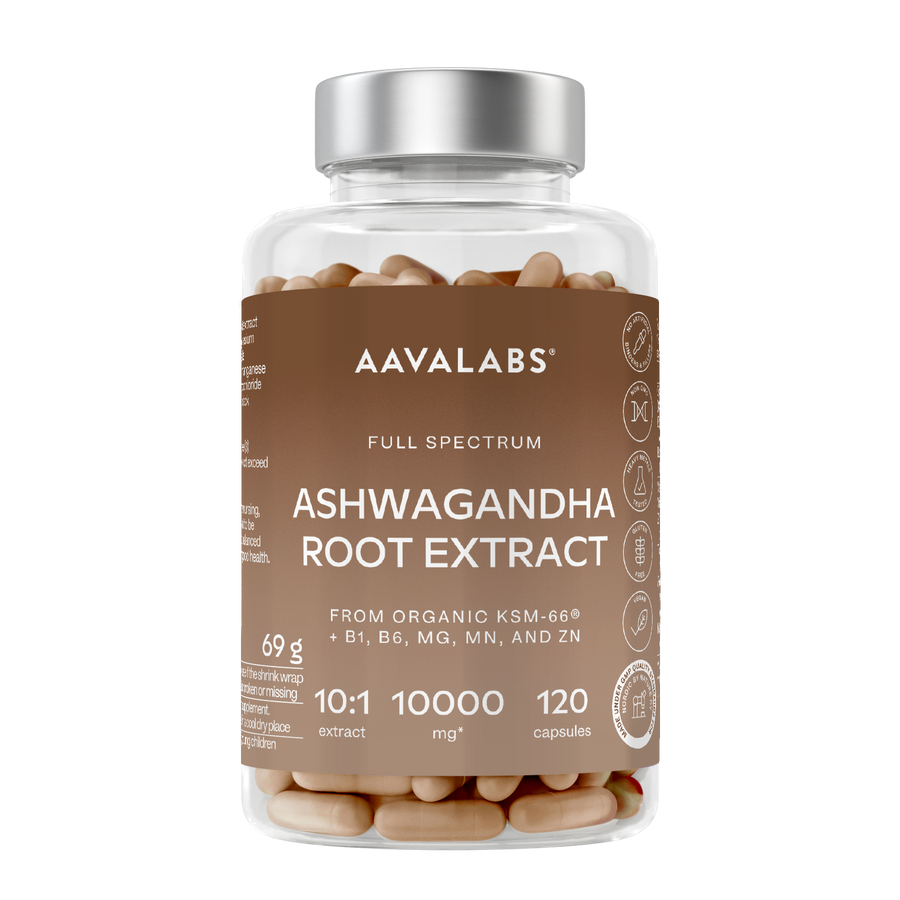
Aavalabs Ashwagandha KSM-66 uses the most clinically studied extract available, standardised for consistent stress, energy and cognitive support.
Discover Aavalabs Ashwagandha KSM-66In Summary
Ashwagandha is one of the most extensively researched adaptogens available, with clinical evidence supporting benefits for stress, anxiety, cognitive function, energy, hormonal balance and immune health. Choosing a standardised extract such as KSM-66 and taking it consistently for at least 4 to 8 weeks gives it the best chance to show its full effect.
Frequently Asked Questions
How long does it take for ashwagandha to work?
Most people begin to notice improvements in stress resilience, mood and energy within 2 to 4 weeks of consistent daily supplementation. More significant effects on cortisol levels, cognitive performance and physical stamina typically develop over 6 to 8 weeks. Ashwagandha is a cumulative adaptogen, meaning its benefits build gradually over time rather than occurring immediately after the first dose.
What is KSM-66 ashwagandha and why does it matter?
KSM-66 is a standardised, full-spectrum ashwagandha root extract developed using a proprietary extraction process to preserve the full profile of active compounds. It's the most clinically studied form of ashwagandha, with over 22 clinical trials supporting its benefits for stress, anxiety, cognitive function, testosterone and athletic performance. Choosing a KSM-66 extract ensures you receive the most evidence-backed and bioavailable form of this herb.
Can ashwagandha help with sleep?
Yes. Ashwagandha helps regulate cortisol, which when elevated disrupts sleep onset and sleep quality. By calming the HPA axis and supporting the nervous system's transition into rest, ashwagandha can improve both sleep latency (time to fall asleep) and sleep quality. Taking it in the evening is a practical approach for those whose primary goal is better sleep. It works complementarily with magnesium for a more comprehensive sleep support routine.
Is ashwagandha safe to take every day?
Ashwagandha is generally well tolerated and safe for daily long-term use at recommended doses. It's one of the most extensively safety-tested herbal supplements available. People who are pregnant or breastfeeding, those with autoimmune conditions or thyroid disorders, and those taking immunosuppressant medications should consult a healthcare professional before supplementing, as ashwagandha stimulates immune function and may interact with certain medications.
Does ashwagandha increase testosterone?
Clinical research suggests yes, in men. Several studies have found that ashwagandha supplementation is associated with significantly higher testosterone levels compared to placebo, with effects appearing after 8 to 16 weeks of consistent use. The mechanism appears to involve support for the hormonal signalling pathways involved in testosterone production and a reduction in cortisol, which can suppress testosterone when chronically elevated.
Can women take ashwagandha?
Yes. Ashwagandha offers meaningful benefits for women including reduced stress and anxiety, improved energy and stamina, better sleep quality and hormonal support, particularly during periods of high stress or hormonal transition. It does not raise testosterone to problematic levels in women at standard doses. As with any supplement, women who are pregnant or breastfeeding should consult their doctor before use.
Should ashwagandha be taken in the morning or evening?
Either can work, depending on your goal. Some people prefer taking it in the morning for energy and cognitive support throughout the day, while others take it in the evening to support relaxation and sleep quality. Consistency in timing matters more than the specific time of day chosen.
References
- Chandrasekhar K, et al. Study on the safety and efficacy of KSM-66 ashwagandha for stress and anxiety.
- European Food Safety Authority (EFSA). Guidance on botanical supplement claims.
- National Center for Complementary and Integrative Health (NCCIH). Ashwagandha overview.
- Journal of the International Society of Sports Nutrition. Research on ashwagandha and athletic performance.