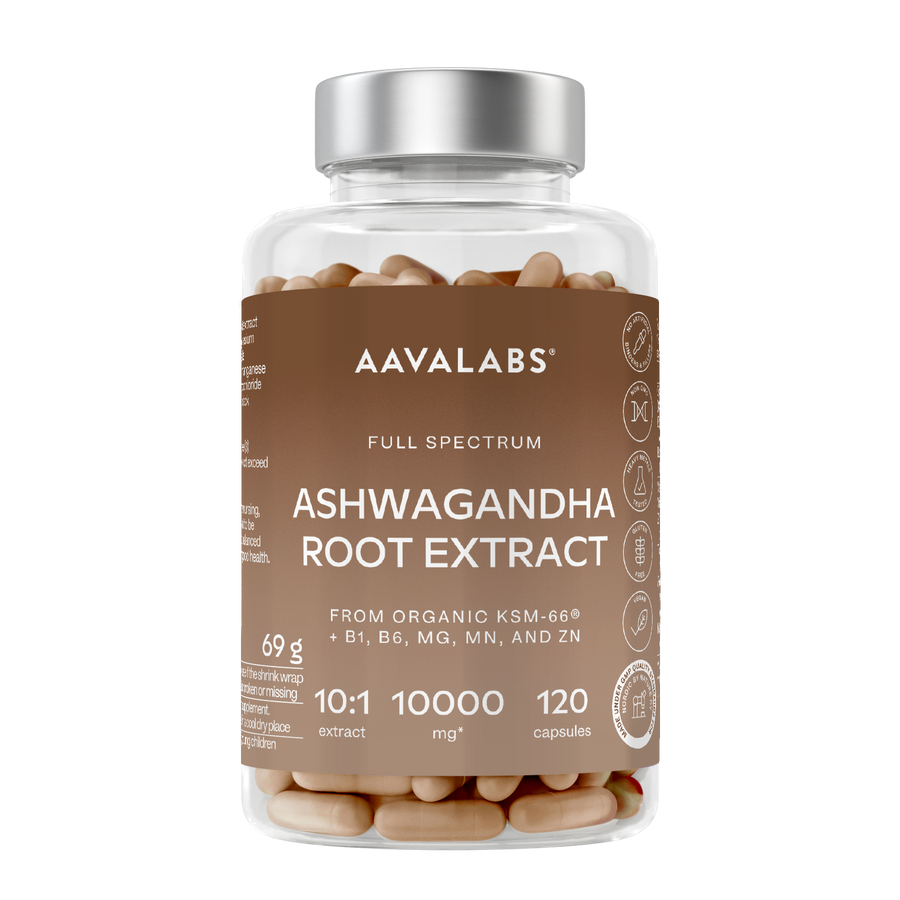
Ashwagandha has been used in traditional Ayurvedic practices for centuries and is now one of the most popular adaptogenic herbs in modern wellness.
But what is ashwagandha, how does it work and what does research say about stress? This guide explores ashwagandha, KSM-66®, cortisol, stress and practical considerations before adding it to your routine.
Stress is a normal part of life, but when busy schedules, work and everyday responsibilities begin to pile up, finding ways to slow down and recover becomes increasingly important.
One botanical that has received considerable attention in recent years is ashwagandha. Used for centuries in traditional Ayurvedic practices, ashwagandha is now commonly found in supplements designed around stress, balance and everyday wellbeing.
But what exactly is ashwagandha, how does it work and what does research tell us about its relationship with stress? Let’s take a closer look.
What Is Ashwagandha?
Ashwagandha, scientifically known as Withania somnifera, is a plant traditionally used in Ayurveda, a system of traditional practice originating in India.
It is sometimes referred to as Indian ginseng, although it is not botanically related to true ginseng.
Ashwagandha is often described as an adaptogen. This term is commonly used for certain plants and botanical extracts that are studied in relation to the body's response to physical and mental stress.
The root is the part most commonly used in modern ashwagandha supplements, although the exact composition of different extracts can vary considerably.
What Are Withanolides?
Many of the naturally occurring compounds found in ashwagandha are known as withanolides.
These plant compounds are frequently used when characterising and standardising ashwagandha extracts. This means that when comparing supplements, you may see information about the percentage or concentration of withanolides on the label.
Because different extracts can contain different concentrations and compositions, the type and quality of the extract are important when comparing ashwagandha products.
What Is KSM-66® Ashwagandha?
KSM-66® is a branded, standardised ashwagandha root extract. It is produced using the root of Withania somnifera and has been used in a number of clinical studies investigating ashwagandha.
Standardised extracts are designed to provide a consistent concentration of selected naturally occurring compounds from one batch to another.
When looking at research on ashwagandha, it is therefore useful to pay attention to the specific extract studied rather than assuming that every ashwagandha supplement is identical.
What Does Research Say About Ashwagandha and Stress?
Ashwagandha has been investigated in human studies exploring perceived stress, cortisol and other measures related to stress and wellbeing.
Some studies using standardised ashwagandha extracts have reported changes in perceived stress scores and cortisol levels compared with placebo.
However, research differs in study design, extract, dosage, duration and participant population. Results from one specific extract or study should therefore not automatically be applied to every ashwagandha product.
Ashwagandha should also not be considered a treatment for anxiety, chronic stress or other medical or psychological conditions.
What Is Cortisol?
Cortisol is a hormone produced by the adrenal glands and is commonly known as a "stress hormone". But cortisol itself is not something we want to eliminate.
It has important physiological functions and naturally follows a daily rhythm. Levels are typically higher around the beginning of the day and lower later on.
Cortisol is involved in processes including metabolism and the body's response to stressful situations.
Research into ashwagandha often measures cortisol alongside questionnaires assessing perceived stress, which is one reason the relationship between ashwagandha and cortisol receives so much attention.
Does Ashwagandha Help With Sleep?
Ashwagandha has also been investigated in relation to sleep.
Some clinical studies have explored measures such as sleep quality and sleep duration following supplementation with specific ashwagandha extracts.
However, sleep is influenced by many factors, including stress, light exposure, caffeine, physical activity, routines and the sleep environment.
Ashwagandha should therefore not replace the basic foundations of healthy sleep or appropriate medical advice when sleep problems persist.
Does Ashwagandha Support Energy and Focus?
Ashwagandha is sometimes marketed for energy, concentration and cognitive performance. Research has investigated some of these areas, but evidence varies depending on the outcome, population and extract studied.
Rather than thinking of ashwagandha as a stimulant that provides an immediate energy boost, it is more useful to understand it as a botanical that has primarily been researched in areas related to stress and wellbeing.
If tiredness or difficulties concentrating are persistent or unexplained, it is important to consider potential underlying factors rather than relying on a supplement alone.
How Long Does Ashwagandha Take to Work?
Ashwagandha is not generally studied as an ingredient with an immediate effect after a single dose.
Clinical trials typically investigate consistent supplementation over a period of several weeks. The exact timeframe differs between studies, as do the extracts and amounts used.
This means there is no single answer to how quickly someone will notice an effect, and individual experiences can vary.
When Is the Best Time to Take Ashwagandha?
There is no universal best time to take ashwagandha.
The appropriate timing can depend on the particular supplement, its recommended use and how it fits into your routine.
Rather than changing the amount or frequency based on general online recommendations, follow the directions provided with the specific product you are using.
How Can You Support Your Body During Stressful Periods?
No supplement can replace the foundations of physical and mental wellbeing. Ashwagandha is best considered within the context of a broader lifestyle rather than as a standalone solution to stress.
Some simple habits that can help create a more balanced routine include:
- Prioritising sleep: Maintain a regular sleep and wake schedule where possible.
- Moving regularly: Walking, strength training, yoga and other forms of movement can all form part of a healthy routine.
- Eating regularly: Build meals around a varied and balanced diet.
- Taking genuine breaks: Create small moments without work, notifications or other demands.
- Spending time outdoors: A walk or simply spending time in nature can provide a natural pause in a busy day.
- Creating calming rituals: Reading, stretching, breathing exercises or a quiet evening routine can help signal the transition from activity to rest.
What Should You Look for in an Ashwagandha Supplement?
Ashwagandha supplements can differ considerably, so it is worth looking beyond the name on the front of the bottle.
Consider factors such as:
- The part of the plant used
- The type of extract
- Whether the extract is standardised
- The amount provided per recommended daily serving
- The manufacturer's quality and testing standards
- Any additional nutrients or ingredients in the formula
If research behind a specific branded extract is important to you, check whether the supplement actually contains that extract rather than a different form of ashwagandha.
Who Should Be Careful With Ashwagandha?
Botanical supplements are not automatically suitable for everyone simply because they are derived from plants.
If you are pregnant or breastfeeding, taking medication, managing a medical condition or unsure whether ashwagandha is appropriate for you, speak with an appropriate healthcare professional before using it.
You should also follow the recommended daily intake provided with your supplement rather than assuming that a higher amount will provide greater benefits.
Frequently Asked Questions About Ashwagandha
What is ashwagandha?
Ashwagandha, or Withania somnifera, is a plant traditionally used in Ayurveda. Its root is commonly used in modern food supplements.
Is ashwagandha an adaptogen?
Ashwagandha is commonly described as an adaptogen, a term used for certain botanicals studied in relation to the body's response to stress.
What is KSM-66®?
KSM-66® is a branded, standardised extract made from ashwagandha root. It has been used in a number of clinical studies investigating ashwagandha.
Does ashwagandha reduce cortisol?
Some clinical studies using specific standardised ashwagandha extracts have reported changes in cortisol compared with placebo. However, results depend on the extract, study design and population, and should not be generalised to every ashwagandha supplement.
Does ashwagandha work immediately?
Ashwagandha is generally investigated over several weeks rather than as an ingredient expected to have an immediate effect after one dose.
Can I take ashwagandha every day?
Many ashwagandha supplements are formulated for regular use. Always follow the recommended intake and instructions for the specific product you are using.
Is ashwagandha a treatment for anxiety?
No. Ashwagandha supplements should not be presented as treatments for anxiety or other medical or psychological conditions. If anxiety or stress is persistent or affecting everyday life, professional support is appropriate.
Key Takeaways
- Ashwagandha is a botanical traditionally used in Ayurveda.
- It is commonly described as an adaptogen.
- Withanolides are naturally occurring compounds found in ashwagandha.
- KSM-66® is a standardised ashwagandha root extract used in clinical research.
- Studies have investigated ashwagandha in relation to perceived stress, cortisol, sleep and other wellbeing outcomes.
- Different extracts should not automatically be considered equivalent.
- Ashwagandha does not replace sleep, nutrition, movement or appropriate healthcare.
Finding More Balance in Everyday Life
Ashwagandha has an interesting history, from its longstanding use in Ayurveda to its growing presence in modern research and wellness routines.
But supporting yourself during stressful periods is rarely about one ingredient. Sleep, movement, nutritious food, recovery and moments of genuine rest remain the foundation of a balanced routine.
If you choose to include ashwagandha, think of it as one part of that bigger picture rather than a quick fix for a busy life.
This article is for informational purposes only and is not intended to diagnose, treat, cure or prevent any disease. If you are pregnant or breastfeeding, taking medication or have a medical condition, consult an appropriate healthcare professional before using food supplements.